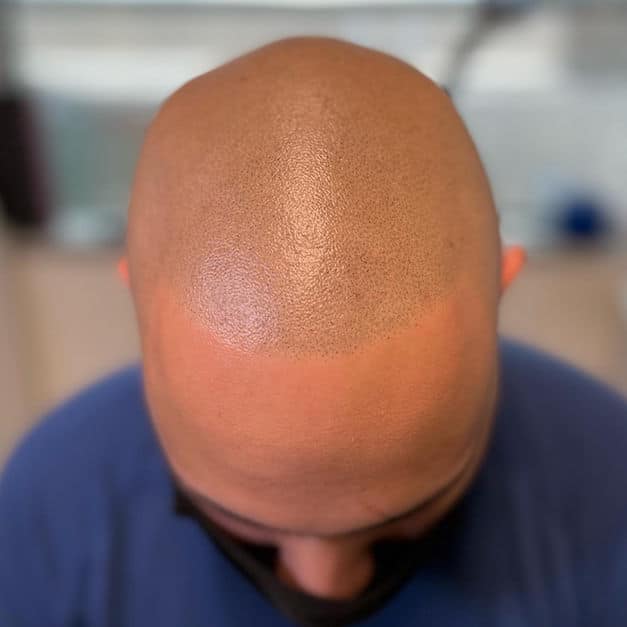
Considering scalp micropigmentation? Knowing what to expect during the healing process can help you care for your hair tattoo and support the best possible results.
Here, we’re discussing what you can expect from scalp micropigmentation side effects and what you can do about them.
The good news? Most side effects are minor, temporary, or avoidable when you choose the right artist and follow your aftercare instructions.
At Edge Scalp Ink, our master artists use SMP to create a natural-looking, age-appropriate hairline, helping you restore the look of fuller, thicker hair without surgery.
Ready to bring back the hairline you remember? Book a consultation with Edge Scalp Ink today.
Want to know more about SMP? Check out our full scalp micropigmentation video playlist.
What Are The Immediate Side Effects of Scalp Micropigmentation?
Right away, you’ll probably notice some redness. You may also experience a little bit of tenderness, so your head might feel slightly sensitive after the treatment.
That redness and tenderness should go away within one to two days.
The second day is when my clients say the magic happens. The inflammation goes away, and you can see your scalp micropigmentation treatment much more clearly.
Uncommon Side Effects of Scalp Micropigmentation
Although most people heal without any major problems, there are a few uncommon SMP side effects to look out for:
Infection (Very Rare With Proper Hygiene)
Scalp micropigmentation can become infected without proper hygiene or when aftercare guidelines aren’t followed.
Infection is a possibility, and you want to avoid it. The best way to do that is by following the guidelines given to you by your artist.
Scabbing or Dry Skin
Another possible side effect is scabbing or dry skin.
Generally, we don’t see dry skin or scabbing at all. If either one does occur, make sure you reach out to your artist and let them know. They can help you figure things out.
Pigment Turning Blue
Sometimes, if an improper technique was used or the pigment wasn’t specifically made for SMP, the dots may turn blue.
That’s a red flag you’ll want to look into with your artist.
Before your treatment, you may also want to ask whether this has happened with any of their previous clients and what kind of pigment they use.
Pigment Migration, Pixelization, or Fanning
Pigment migration is sometimes called pixelization or fanning.
Initially, the dots have a very clear border. Over a couple of years, that border may fade out very slightly.
That isn’t something you should worry about. It’s common and normal.
What you should worry about is a blowout. A blowout can happen when your artist goes too deep and causes a lot of blurring in the pigment.
That’s something you may want to look into if you notice it.
Allergic Reactions
Worried about an allergic reaction? Most people who have an allergy to ink already know about it and may ask for a patch test.
That’s something we can do during your consultation. We’ll simply place a couple of dots of pigment into your skin, and then you can wait to see whether you have a reaction.
Most people don’t have a reaction. We don’t use heavy metals in our pigments, so allergic reactions are very uncommon.
How to Prevent Side Effects After SMP
Follow these guidelines to prevent complications and ensure the best results after SMP:
Research Your SMP Artist
One of the biggest ways to avoid side effects is to research, research, research. Picking an inexperienced artist is one of the biggest SMP regrets.
Choose the right artist and ask the right questions. That will help you determine whether the artist really knows what they’re doing.
Avoid Direct Sun Exposure
Avoiding direct sun exposure is key.
This is especially important if you go on vacation somewhere like the Caribbean or Hawaii. You’ll want to use sunblock and cover the treated area.
Scalp Micropigmentation Aftercare
For four days, our SMP aftercare guidelines say you should:
Avoid Excessive Sweating
You shouldn’t do anything that causes excessive sweating. That includes activities like going to a sauna or running a marathon.
Keep Your Scalp Dry
You don’t want to get your hair or scalp wet at all.
Keeping the area dry gives your scalp time to heal properly.
Avoid Touching Your Scalp
You also don’t want to touch your scalp with your fingers because you don’t want to introduce bacteria or cause an infection.
And, as I mentioned earlier, avoid direct sunlight while the scalp is healing.
Prevent SMP Side Effects with Edge Scalp Ink’s Master Artists
The best way to reduce the risk of side effects after SMP is to choose an experienced artist, ask the right questions, and carefully follow your aftercare guidelines.
At Edge Scalp Ink, our trained SMP artists only use natural pigments and provide clear aftercare guidelines to help you heal properly and get the best results from your new hairline.
Ready to plan your new look? Book a consultation and meet with our SMP artists.